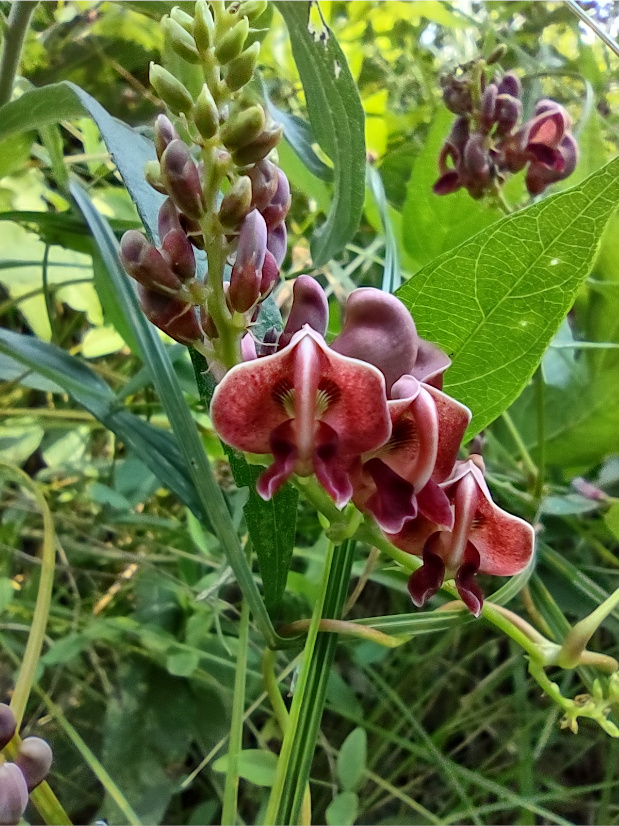
Surprise find, August 2025
I started talking walks at a particular park in my area when things in life are going badly. There are native wildflowers, a river with a wooden overlook, and usually lots of insects. The native plants are never anything super unusual though I enjoy them: joe pye weed, purple coneflower, ironweed and rudbeckia in the sunny areas, and sedges near the river. I look at everything I can, take photos, touch plants, watch the young fish in the shallow area from the overlook, and stare at the water beetles. It gives my brain a peaceful distraction from what's going on and something else to focus on, plus being out in nature almost always makes me happier.
On this particular day (I don't remember the exact date), I had almost walked into a spider's anchor line in a shady area near the river and was looking around to see who'd made it. It went from a tree limb to the ground. As I looked at what were mostly sedge grasses tucked under an invasive honeysuckle bush, I noticed an unusual burgundy color. I'd seen this plant before in one of my field guides, but never in person in all the traipsing around I've done in wild places. I couldn't remember the name. I actually got pretty excited about it and took some pictures of it as well as the silver spotted skipper on ironweed in the page background.
When I got home I looked it up and found that it's calledAmerican groundnut, Apios americana. I read that its small underground tubers were edible if cooked and really good for you vs. potatoes. I watched a video with a guy in ireland who was farming them inside a greenhouse who said the tubers go for high prices in Europe. They are also commercially farmed in Japan. I read that there was a failed attempt at cultivating them in the US. I want to turn part of my yard into a native flower habitat, so I wondered if I could go back later and collect some seeds or a tuber or two. Apparently despite being eaten regularly by some native american tribes, these plants are difficult to cultivate, often taking at least two years for adequate tuber production and generally producing few fertile seeds if any.
I'm not going to take anything from the plant. As a legume, it fixes nitrogen for nearby plants, and If it has that difficult of a time reproducing via pollinators, it's best left where it is and it's no wonder I've never seen one before. It'll just be my secret and a beautiful plant I know I can visit next August.
